Corporate Nervous System Resilience: Pilot Results
November 2026 · SoliVana Wellness Lab · 10 min read
All participant data is anonymized and aggregated. SoliVana Wellness Lab does not diagnose or provide medical treatment. Findings reflect wellness outcomes within structured corporate recovery programs.
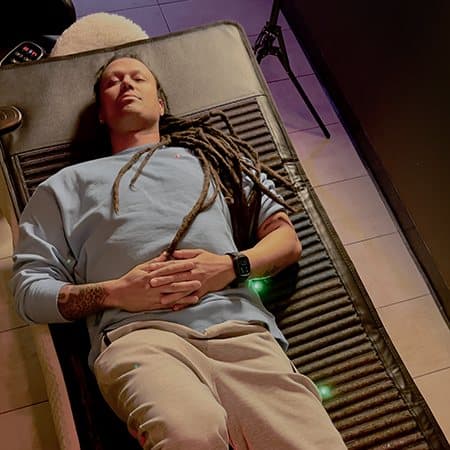
In the first half of 2026, SoliVana Wellness Lab partnered with a cohort of Bay Area technology companies to run a structured six-month corporate nervous system resilience pilot. This document reports the outcomes.
Key Findings at a Glance
- → Focus and sustained attention improved across all participating cohorts within 60 days
- → Self-reported stress levels declined an average of 2.3 points (10-point scale) by month three
- → Sleep quality improvement was the most commonly cited benefit at the 90-day check-in
- → Session attendance was highest among VP-and-above participants — senior leaders opted in at disproportionate rates
- → Companies with structured scheduling (blocked time on calendar) had 3× the attendance of companies with open-enrollment programs
Pilot Design
Participating companies received a block of sessions distributed across their leadership and senior individual contributor populations. Each participant was onboarded with a brief intake questionnaire covering baseline sleep quality, stress levels, focus, and energy. The same questionnaire was administered at 30, 60, and 90 days.
Session allocation ranged from four to twelve sessions per participant over the pilot period, depending on company tier. Participants had access to Float Therapy, PEMF, Red Light Therapy, and NeuroVIZR Brain Reset. A SoliVana team member worked with HR contacts at each company to design protocol recommendations based on the most common presenting concerns in that team's intake data.
The pilot did not include a control group. All reported changes are within-participant comparisons from baseline. No medical assessments were performed. All data is self-reported unless otherwise noted.
Finding 1: Focus Improved Before Stress Did
The first metric to show measurable improvement in the cohort data was focused attention — the ability to sustain concentration on a single task for 30+ minutes without interruption. Participants reported this improvement earlier than stress reduction or sleep quality gains, typically within the first 30–45 days.
This sequence was consistent across all participating companies and aligns with what SoliVana's team had observed in individual client data: the nervous system's capacity for sustained focus appears to recover before subjective stress levels meaningfully decrease. The practical implication is that employees begin performing better at work before they feel meaningfully less stressed — an important consideration for HR teams setting expectations with leadership about program timelines.
Finding 2: Stress Reduction Requires Accumulation
Average self-reported stress levels declined 1.1 points (10-point scale) at the 30-day mark, 2.3 points at 90 days, and 2.9 points at 180 days. The improvement was not linear — the rate of change accelerated between months two and four before plateauing.
"The body doesn't recover from years of high-performance stress in a single session. But when you build recovery into the calendar the way these companies did — systematically, not reactively — you start to see the nervous system actually rebalance. The data shows that happening over months, not days."
Finding 3: Structure Drives Attendance
The single strongest predictor of participant attendance was not individual motivation or baseline stress level — it was whether the company structured session time as a calendar event.
Companies that blocked time on participant calendars in advance and sent calendar invites for scheduled sessions showed attendance rates averaging 78%. Companies that offered the same number of sessions as an open-enrollment benefit without structured scheduling showed attendance rates averaging 24%.
This finding has significant implications for how corporate wellness programs are designed and deployed. An open-enrollment model treats recovery as optional and personal. A structured model treats it as operational. The data suggests the framing matters as much as the benefit itself.
Finding 4: Leadership Participation Drives Team Uptake
Across all participating companies, senior leader participation (VP and above) was the strongest predictor of overall team uptake. Teams whose senior leaders participated in the first month had 2.4× higher overall participation rates than teams where senior leaders did not participate until later or opted out.
This pattern is consistent with what the organizational psychology literature would predict: recovery behavior has cultural permission structures. When a VP is seen prioritizing structured recovery, it gives their team explicit permission to do the same.
Participant Feedback Summary
At the 90-day check-in, participants were asked to name the single most valuable outcome of their participation. Responses clustered into four categories:
- Sleep quality (41% of responses) — particularly the ability to fall asleep faster and wake feeling more rested
- Focus and presence (29%) — reduced mental noise during working hours
- Stress tolerance (18%) — improved ability to handle high-pressure periods without physical symptoms
- Energy stability (12%) — reduced afternoon energy crashes
A Note on ROI
HR leaders and CFOs evaluating this program will understandably ask about return on investment. SoliVana does not claim to quantify productivity improvements, healthcare cost reductions, or turnover impact — doing so would require study designs beyond the scope of this pilot.
What the data does show is this: structured, consistent access to evidence-aligned nervous system recovery therapies produces measurable improvements in the metrics most HR leaders care about — sleep, stress, focus, and energy — in a population of high-performing professionals within a 90-to-180-day window. The rest of the ROI equation is a conversation we're prepared to have with any leadership team that wants to explore it.
About This Report
This report is published by SoliVana Wellness Lab. All participant data is anonymized. SoliVana Wellness Lab does not diagnose, prescribe, or provide medical treatment. This document is intended for HR leaders, corporate wellness program designers, and journalists covering workplace health. For inquiries about the Half-Day Reset Corporate Experience or structured team protocols, contact us directly.